Ballots Change, Donors Stay: Why Big Money Keeps the US Status Quo Intact
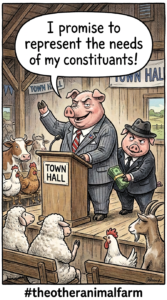
Every two years, American voters go to the polls believing a shift in congressional control will deliver meaningful change. In the 2026 midterm elections, frustration over living costs and foreign conflict drove voters to hand Democrats control of both the House of Representatives and the Senate. Yet even when the partisan balance in Washington flips, the deeper economic and regulatory status quo rarely budges.
The reason lies not in who wins the election, but in who pays for it. Behind the scenes of American democracy, a small class of billionaires, corporate interests, and dark money networks funds campaigns on both sides of the aisle—ensuring that whoever holds the gavel remains accountable to their benefactors first.
A Record-Shattering Price Tag for Power
Running for federal office in the United States has become a multi-billion-dollar arms race that ordinary voters cannot compete with. According to campaign finance tracker OpenSecrets, total spending in the 2026 midterm cycle was projected to shatter records at roughly $11.9 billion, marking an increase of nearly 30 percent over the 2022 midterms.
A staggering share of that cash comes from an ultra-wealthy fraction of the population. Research from the Brennan Center for Justice reveals that the top 40 individual midterm donors alone contributed $2.4 billion by mid-October 2026, eight times the inflation-adjusted total of top donors in 2014. Tech billionaire Elon Musk topped the rankings by pouring more than $445 million into Republican campaigns and outside groups, while major liberal financiers like George Soros and Michael Bloomberg directed tens of millions toward Democratic committees. When candidates rely on mega-donors and Super PACs to survive expensive media markets, the donor class effectively acts as a gatekeeper before a single vote is cast.
The “Investment Theory” of Politics
Political scientists often describe modern campaign finance through the “investment theory of politics,” an idea highlighted by scholars at the Brookings Institution. Under this model, wealthy individuals and corporations do not donate tens of millions of dollars out of civic charity; they treat political spending as a high-return financial investment.
A few million dollars spent on Super PAC advertisements or dark money nonprofits can yield hundreds of millions in favorable tax loopholes, government contracts, or blocked regulations. In the 2026 cycle, for example, the Brennan Center for Justice noted that artificial intelligence and cryptocurrency firms poured over $127 million into primaries specifically to deter candidates who favored industry regulation. Whether a Democrat or Republican wins the seat, lawmakers who depend on these industries to fund their next campaign face immense pressure to leave corporate interests untouched.
When Elites and Voters Disagree, Elites Win
Empirical research confirms that this financial dependency directly shapes how Congress governs. In a landmark study by political scientists Martin Gilens of Princeton University and Benjamin Page of Northwestern University, researchers analyzed nearly 1,800 policy outcomes over two decades and concluded that economic elites and organized business groups exert substantial, independent influence over U.S. government policy.
By contrast, when average citizens disagree with wealthy elites on economic, tax, or regulatory issues, the preferences of ordinary voters have virtually no measurable impact on what Congress passes. As documented by UCLA Blueprint, whether 20 percent or 80 percent of average Americans favor a policy change, the likelihood of it becoming law stays flat unless affluent donors and business lobbies back it too.
Bipartisan Hedging Protects the System
Crucially, corporate and billionaire influence is not confined to one political party. While partisan mega-donors grab headlines, major financial firms, tech giants, and lobbying groups routinely hedge their bets by funding incumbents and leadership committees across both parties.
Data from the Brennan Center for Justice shows that bipartisan and special-interest giving among top donors increased a hundredfold in the 2026 cycle compared to 2014, while organized labor vanished from the top 40 donor list entirely. This ensures that a change in congressional majority rarely threatens entrenched interests. A Democratic Congress may launch investigations or shift rhetoric on social issues, while a Republican Congress may emphasize deregulation, yet both parties depend on the same concentrated pool of private capital to keep their campaign machinery running.
A Literary Warning: The Other Animal Farm and Shared Prosperity
This dynamic, where nominal leaders change while a privileged class quietly captures the rules for its own enrichment, echoes the central warning of The Other Animal Farm and the enduring allegorical tradition of George Orwell’s Animal Farm. Just as Orwell’s fable showed how revolutionary promises of equality give way to a ruling caste that rewrites the commandments to justify its own luxuries, The Other Animal Farm shines a spotlight on how modern political systems are hollowed out when wealthy, influential insiders bankroll decision-makers and bend governance to serve narrow self-interest.
More importantly, The Other Animal Farm warns that this arrangement is not merely unfair, it is an existential threat to future prosperity for everyone. In the allegory, when the ruling class takes control and dismantles shared rules to protect its own privileges, the farm’s capacity to meet the essential needs of all animals’ collapses. Applied to modern America, the warning is stark: when lawmakers prioritize the short-term tax breaks, monopolies, and deregulation demanded by mega-donors over public infrastructure, education, fair competition, and working-class stability, the foundations of broad-based economic growth erode. A society built to enrich a tiny donor class at the expense of the majority eventually starves the very middle class and civic trust that sustain national prosperity.
The Illusion of Change
Public opinion polls from the Pew Research Center show that roughly eight in ten Americans—across both parties—believe major campaign donors have too much influence over decisions made by members of Congress. Yet because the very lawmakers who benefit from this system are the ones tasked with reforming it, campaign finance rules remain largely untouched.
Until the umbilical cord between private wealth and political survival is cut, midterm elections will continue to rearrange the partisan furniture in Washington while leaving the real landlords, and the risks to our shared future, firmly in charge.
